Seeds and pods
Long, oval, spiked and winged: a lesson in how plants travel.
We're still building this website. Some links and buttons don't work yet — more features will be live by the end of November.
Built for hands-on exploration that evokes wonder and facilitates natural history learning.
A natural history museum that fits in one trunk and travels to classrooms, community halls, gardens and living rooms, wherever curious minds gather. Nothing sits behind glass. Everything is real, tactile, and most of it can be found right around us.
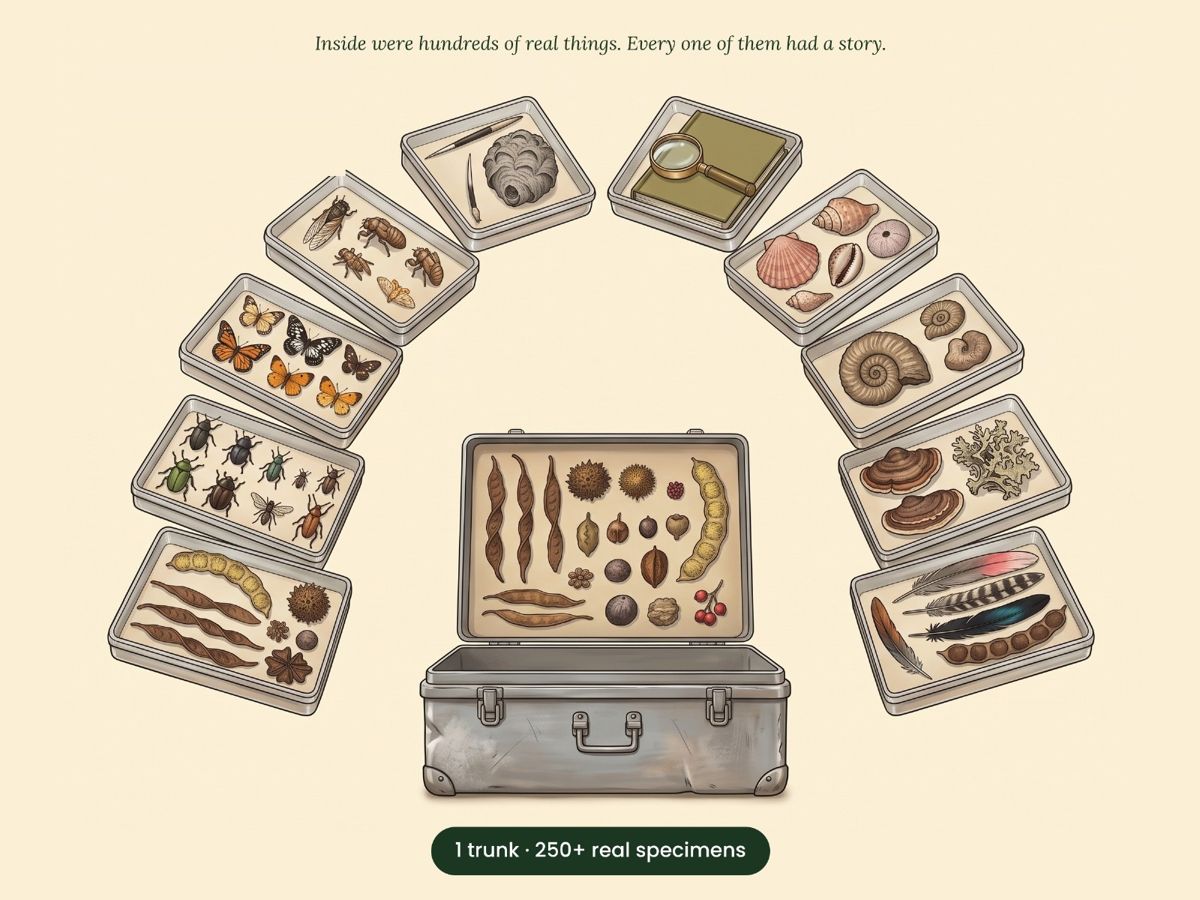
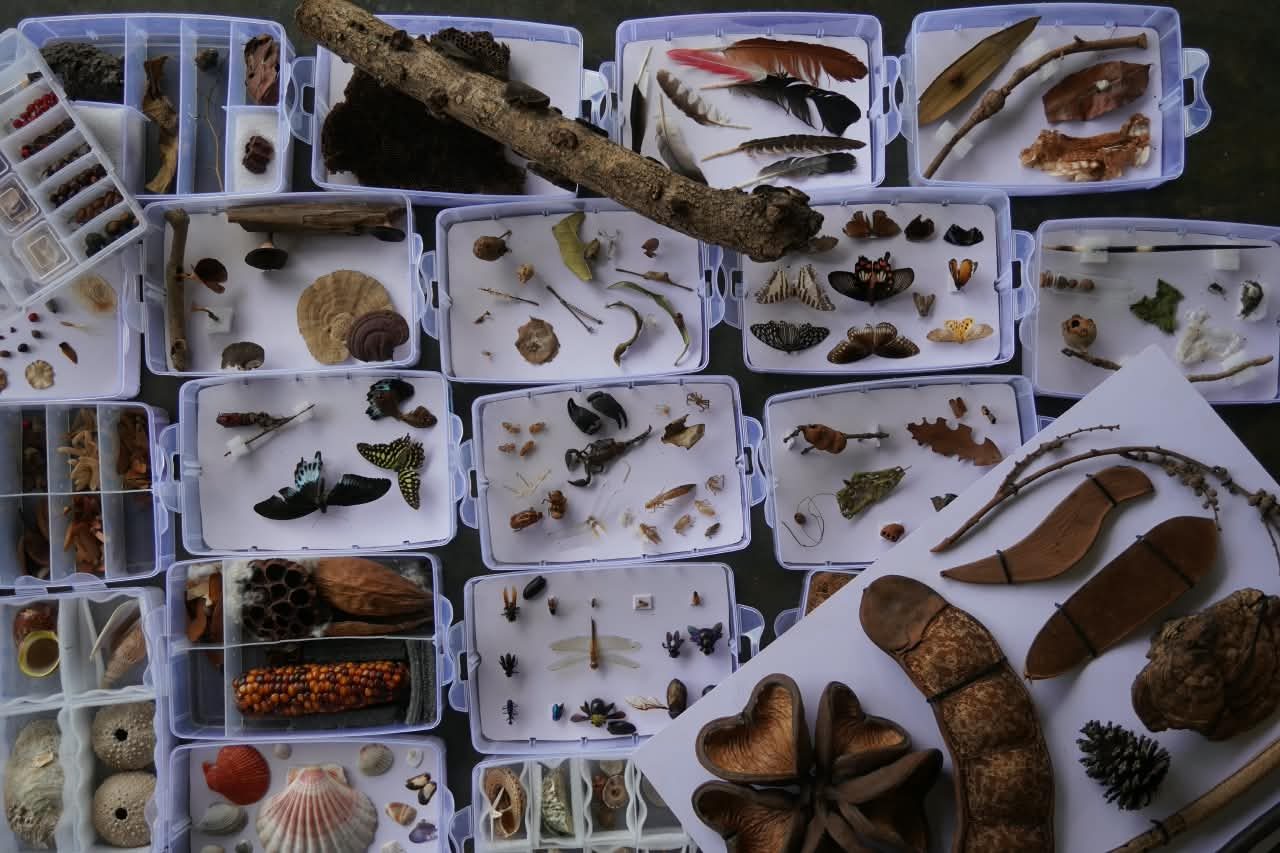 1 trunk · 250+ real specimens
Watch a session unfold: the box opens, hands go up, and questions start tumbling out.
Hundreds of real things, packed tray by tray. Every one of them has a story, and most of them came from places we walk past every day.
Long, oval, spiked and winged: a lesson in how plants travel.
Flight, warmth and colour, and the hidden science in each one.
Treasures from our coast, and the animals that built them.
Beetles, cicadas and butterflies to study up close, wing by wing.
A wolf spider's moult and a snake's old skin: proof of growing up.
Including a giant umbrella-shaped Ganoderma, the decomposers' star.
Woven bird nests and little mud pots built by potter wasps.
Life from millions of years ago, turned to stone, and now small enough to hold.
A log drilled by a carpenter bee, and other clues animals leave behind.
Nothing in the museum was taken alive. Most items were found already dead or shed, picked up from roads, paths and the ground, and they are kept purely for education.
We do not encourage anyone to collect from nature, and we condemn collecting wildlife unethically. If you find something, look closely, take a photo, and leave it where it is.
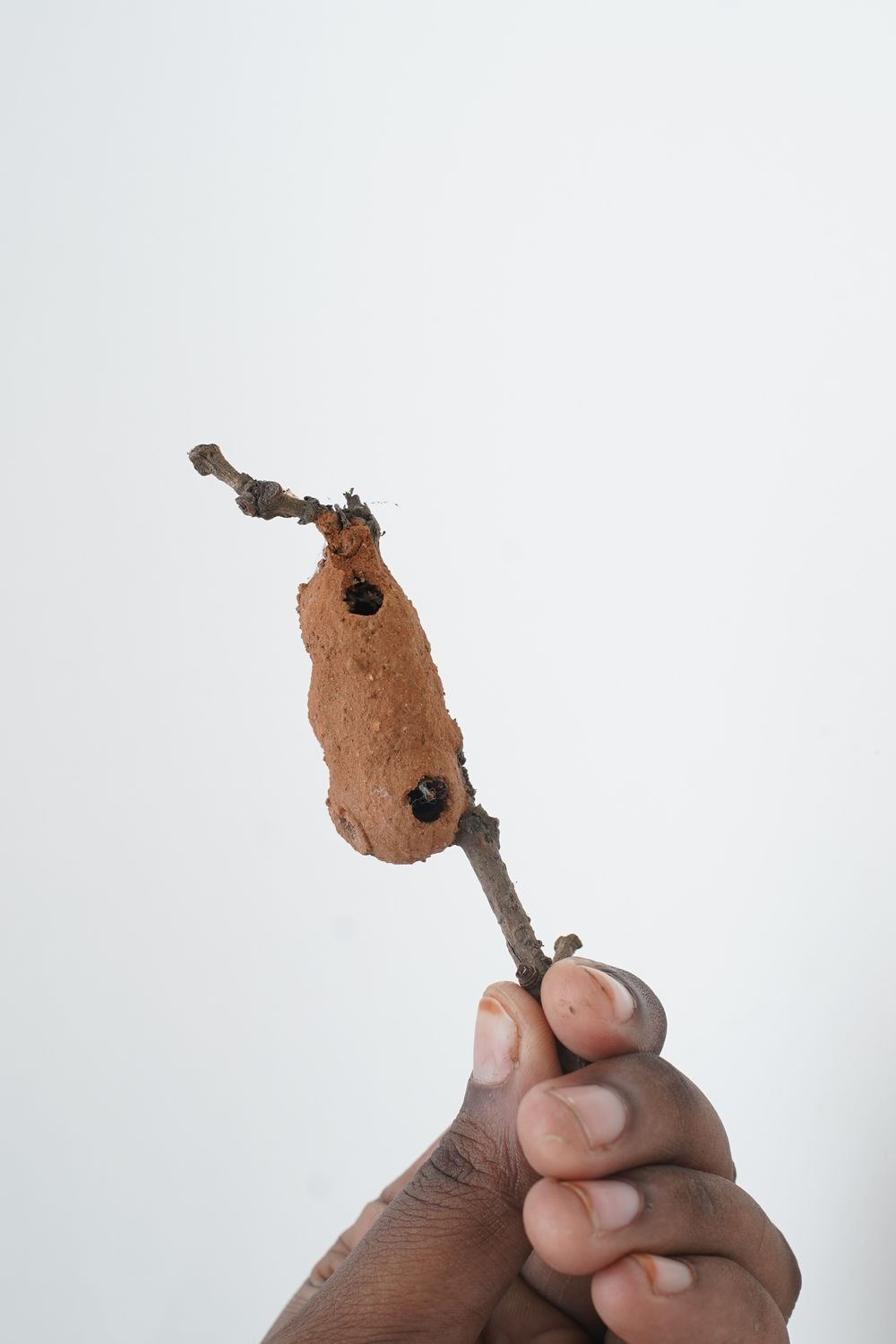
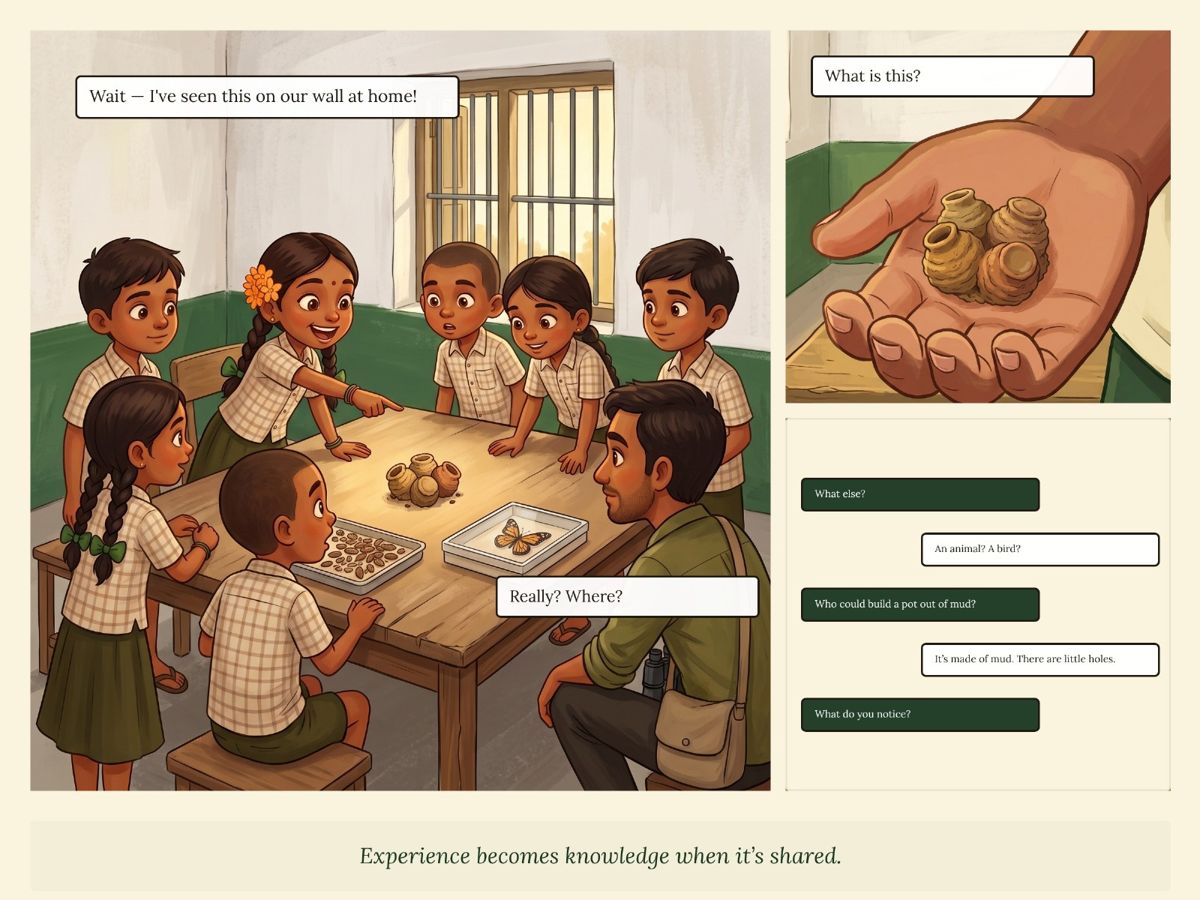
A mother potter wasp builds a nest like this from wet mud, one small ball at a time. She packs each cell with caterpillars for her young, seals it and flies away. The round holes are where the new wasps chewed their way out.
You don't need a forest to find one. Look on the walls of your school or home, under window ledges, behind doors and on twigs nearby. Once children have held this nest in the museum, they start spotting them everywhere.
About an hour, led by a nature educator. No lecture: just real objects, good questions, and time to wonder.
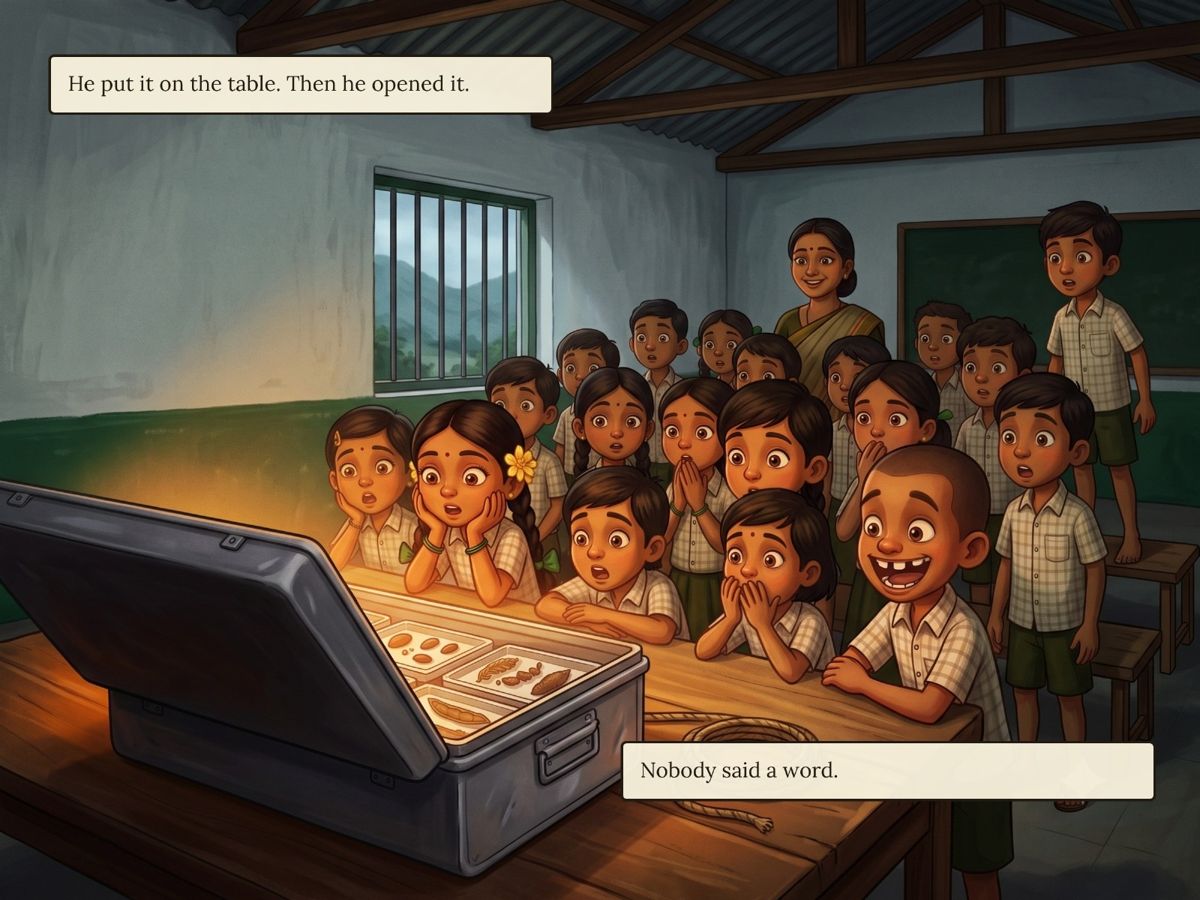
The trunk goes on the table. The lid comes up. Nobody says a word.
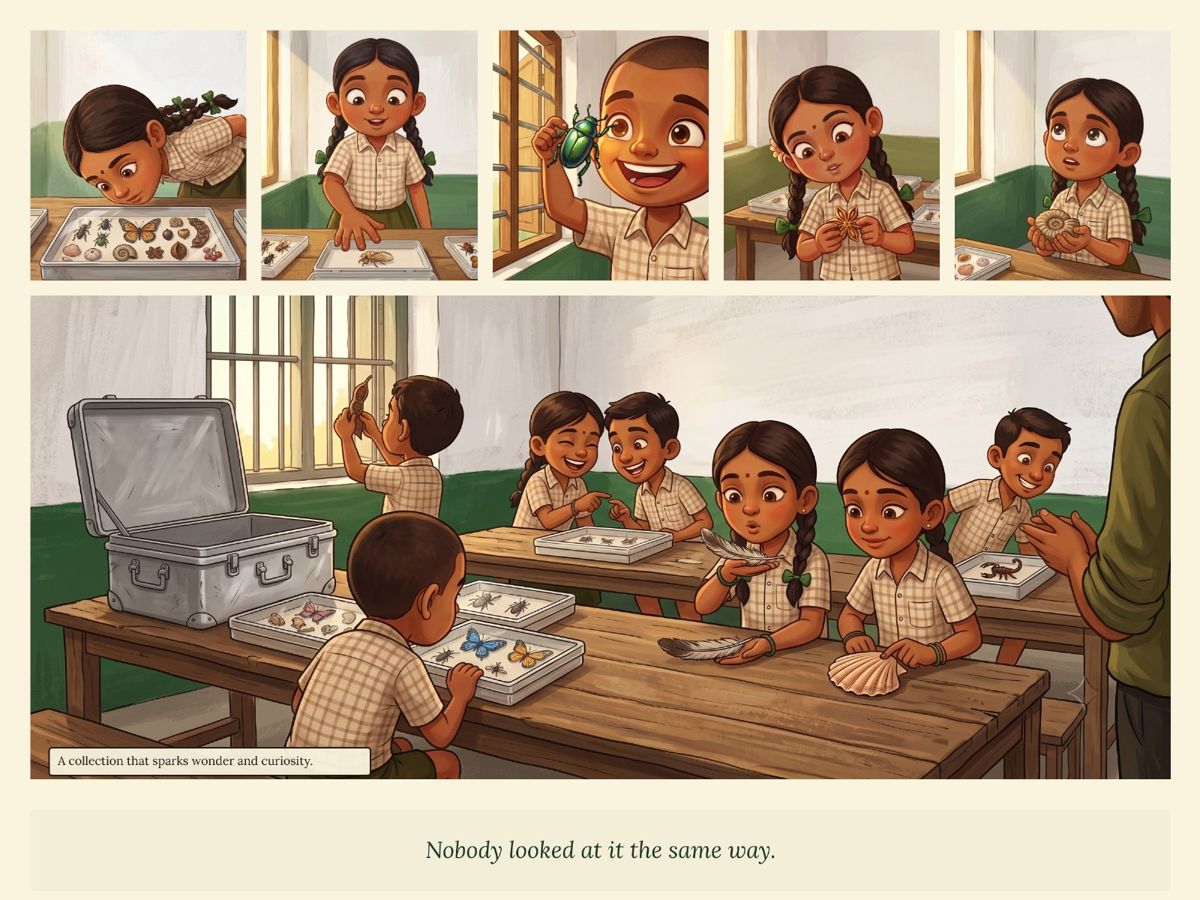
Specimens go hand to hand, gently and under supervision, with magnifying glasses.
What is this? Who made it? Children sketch, guess and question.
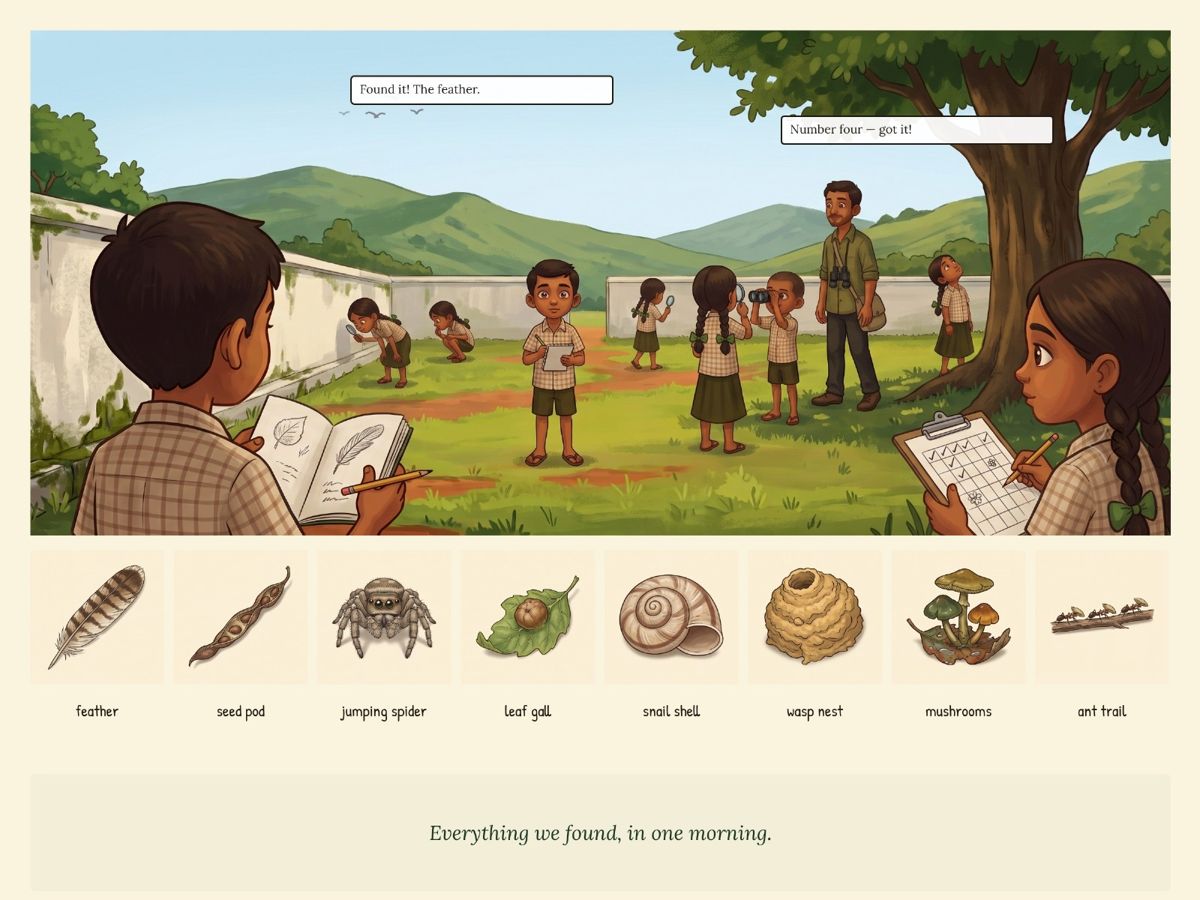
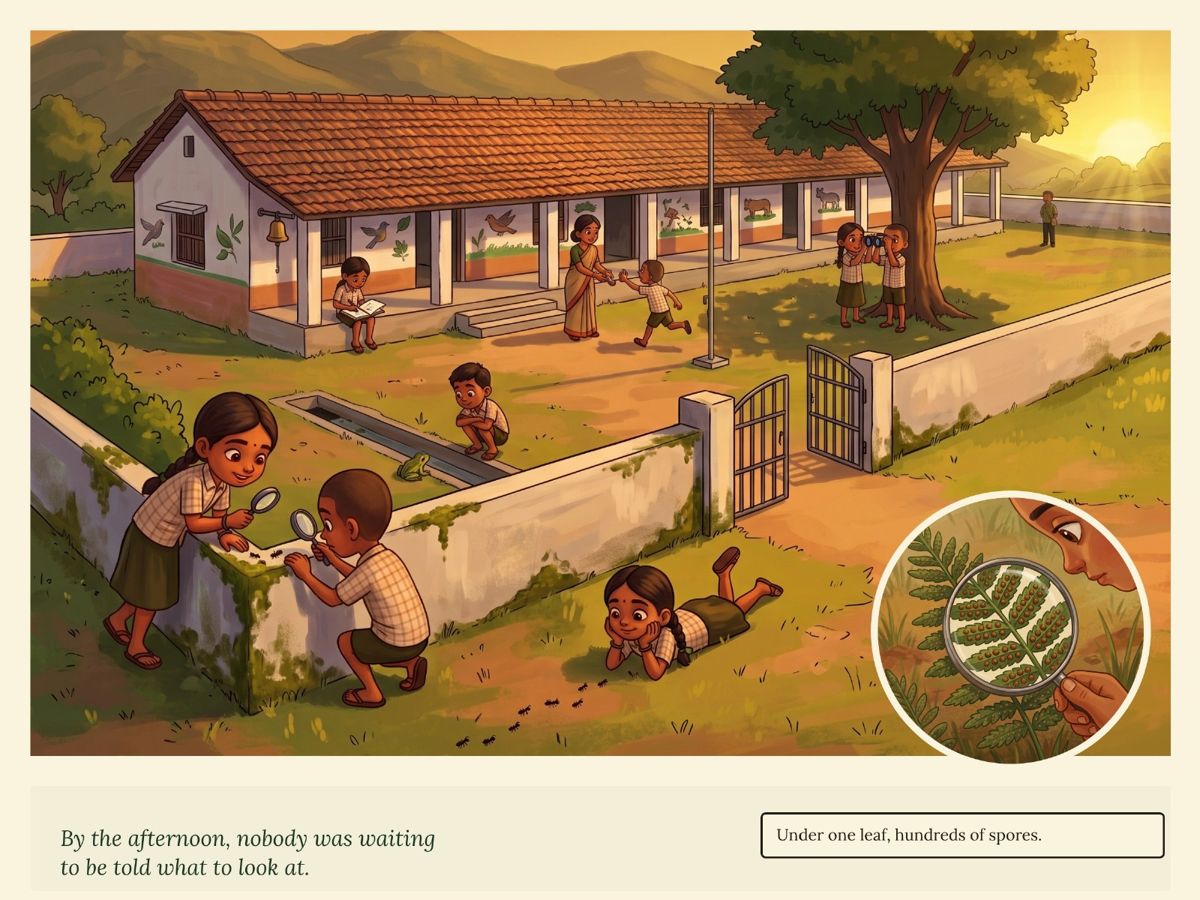
Then out to the school wall, the garden or the park, to find the living versions.
Finds become stories, charts and conversations. Experience becomes knowledge when it's shared.
An hour with the museum changes how children look at the world around them. Here's what we see, session after session.
Real objects spark the "what is this?" moment that makes children want to find out more.
Holding a feather, a shell or a seed pod uses every sense, so what children learn stays with them.
Magnifying glasses and sketching train children to notice shape, texture, pattern and change.
Who made this? Why is it shaped like that? Children learn to wonder, guess and check, the habits behind all science.
Life cycles, adaptation, seed dispersal and decomposers become real, and link to what children study in class.
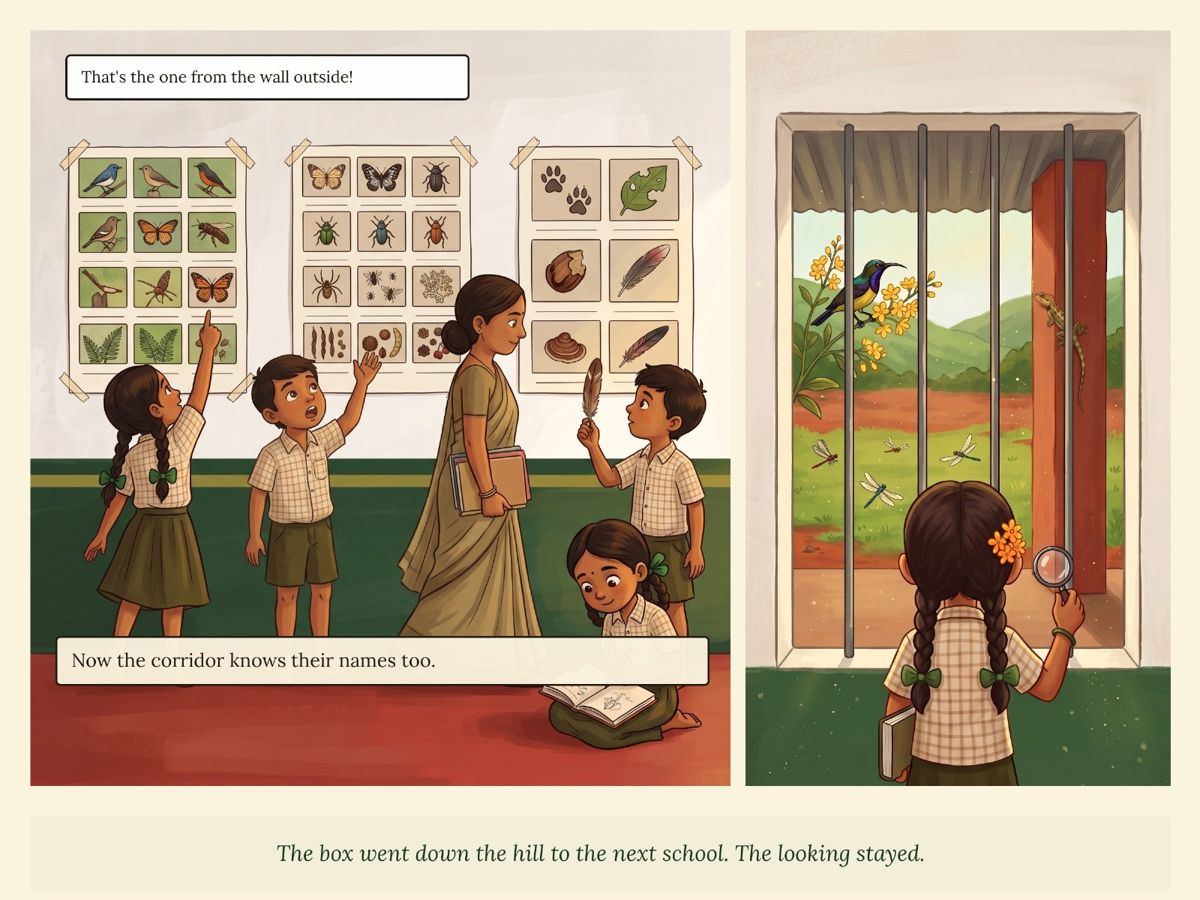
After a session, children start spotting nests, moults and seeds around their own school and home, and caring for them.
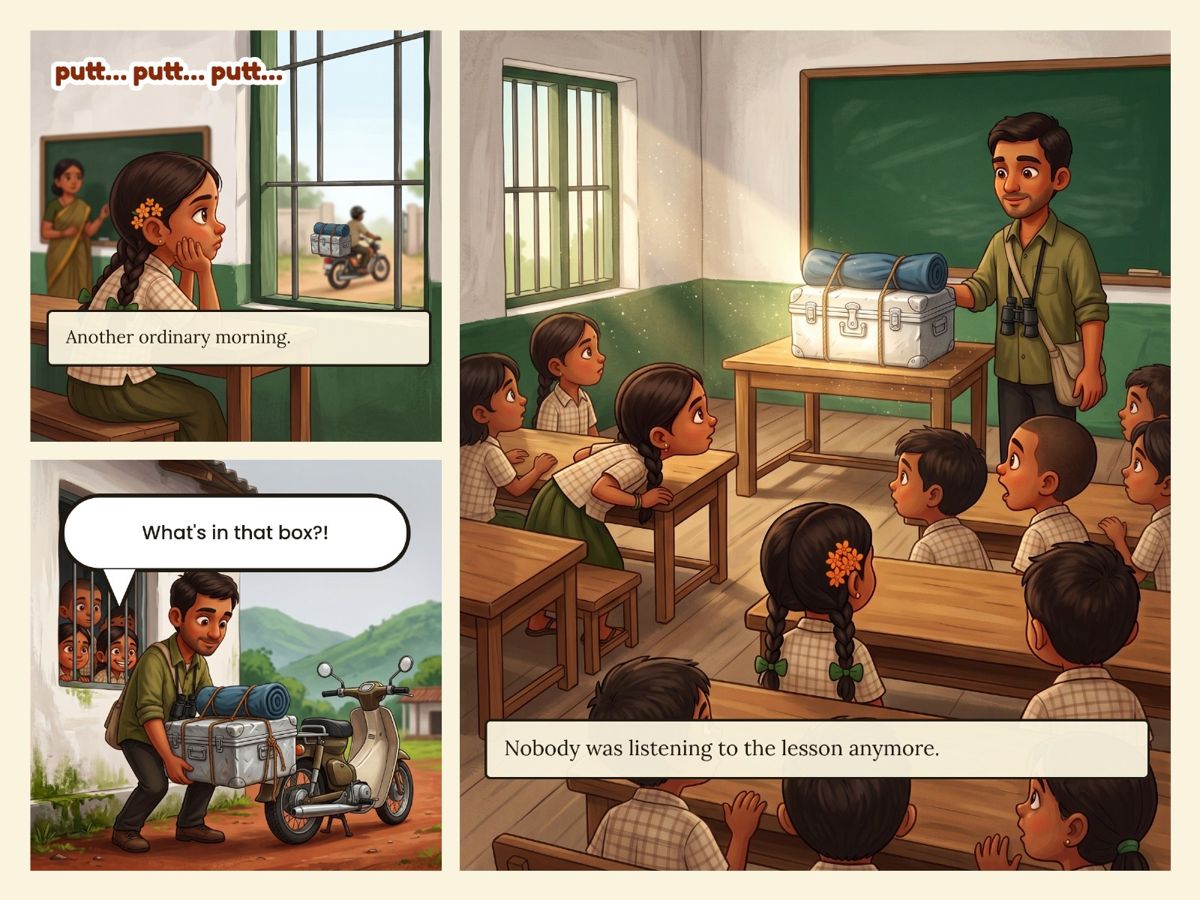
"What's in the box?" A day the museum came to school, as an illustrated story. Swipe or scroll sideways.
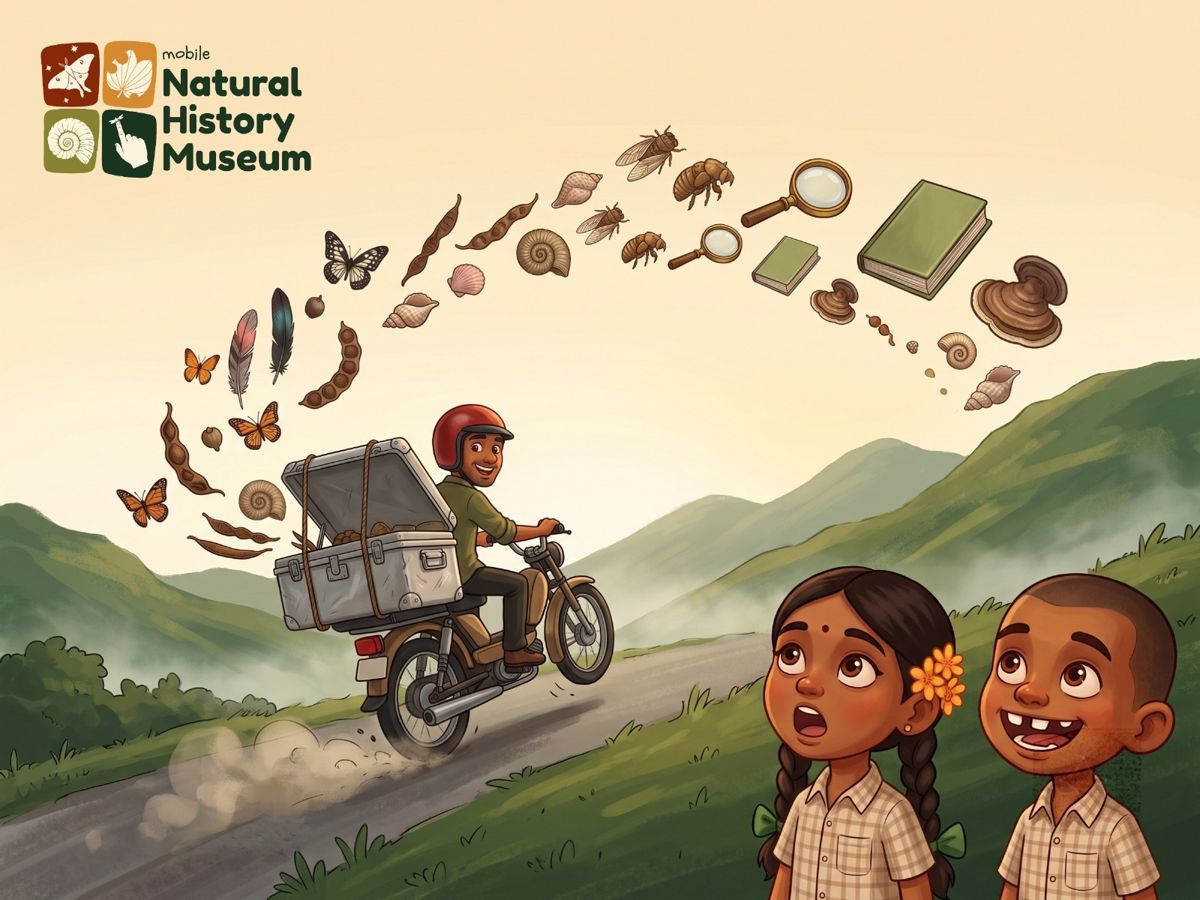
It's portable, so it sets up wherever people are.
Single sessions or multi-day museum residencies that link to the curriculum and send children outdoors.
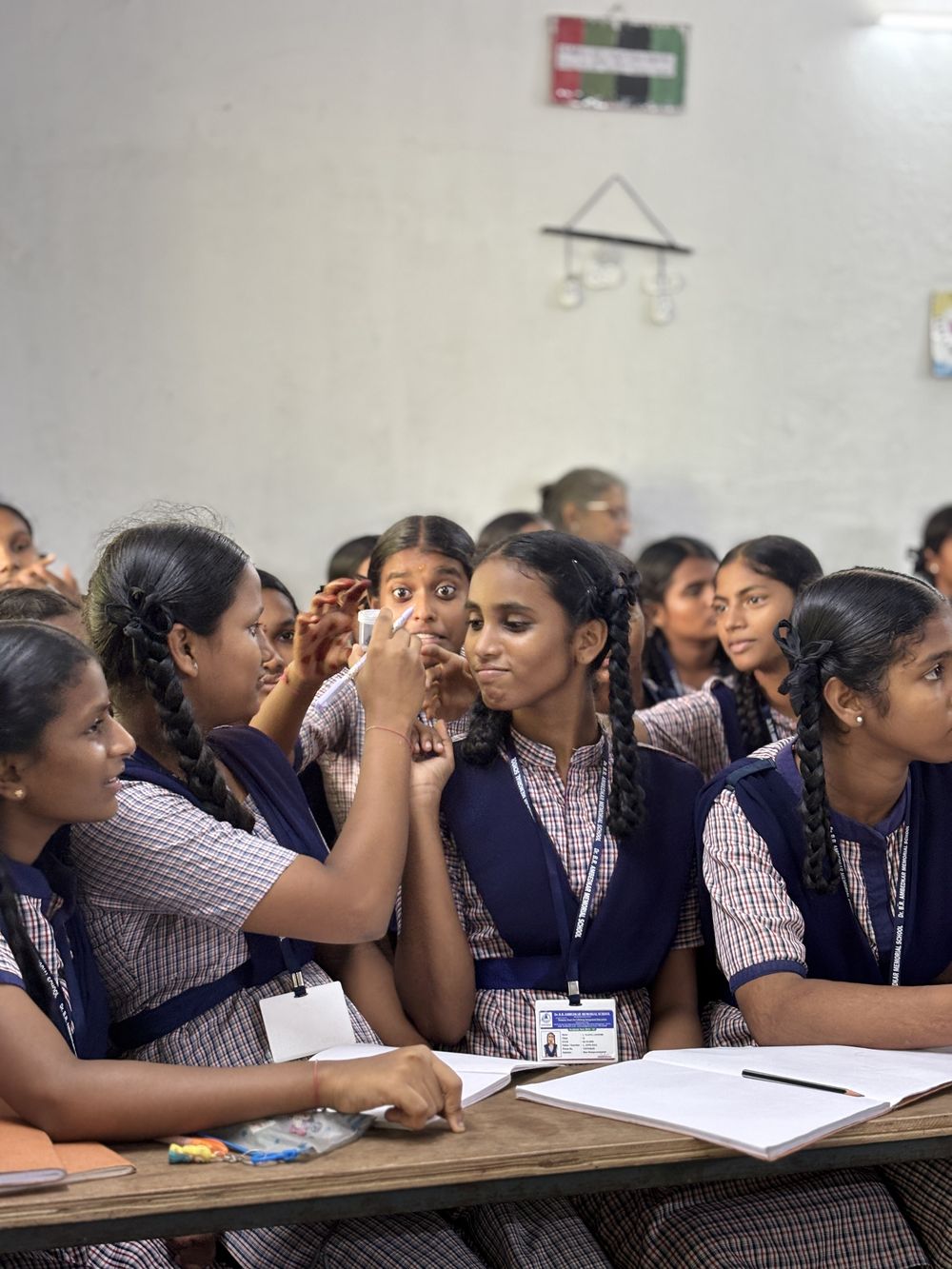
Open-air sessions for families in residential societies and neighbourhood spaces.
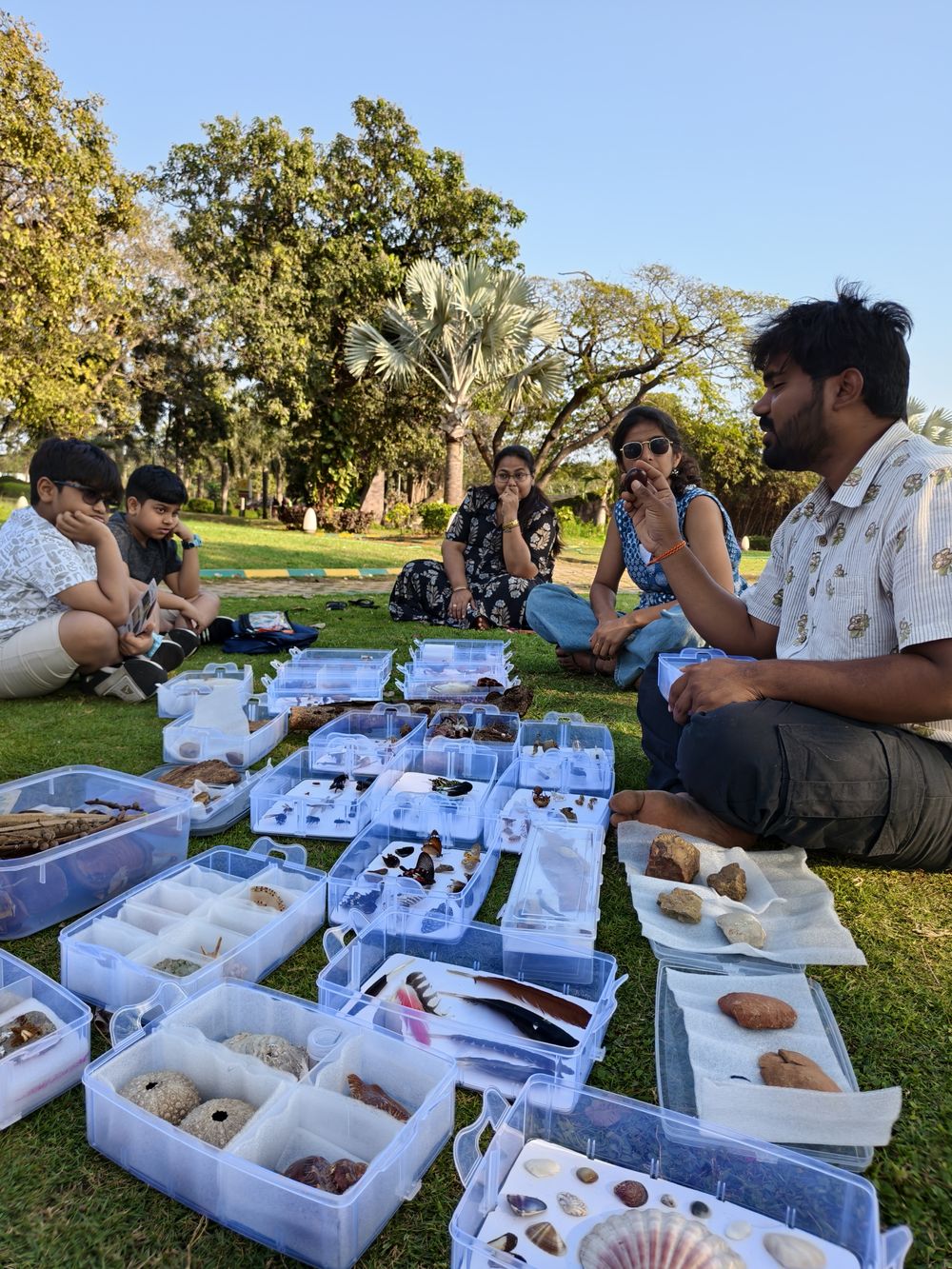
A pop-up museum table that draws a crowd of all ages.
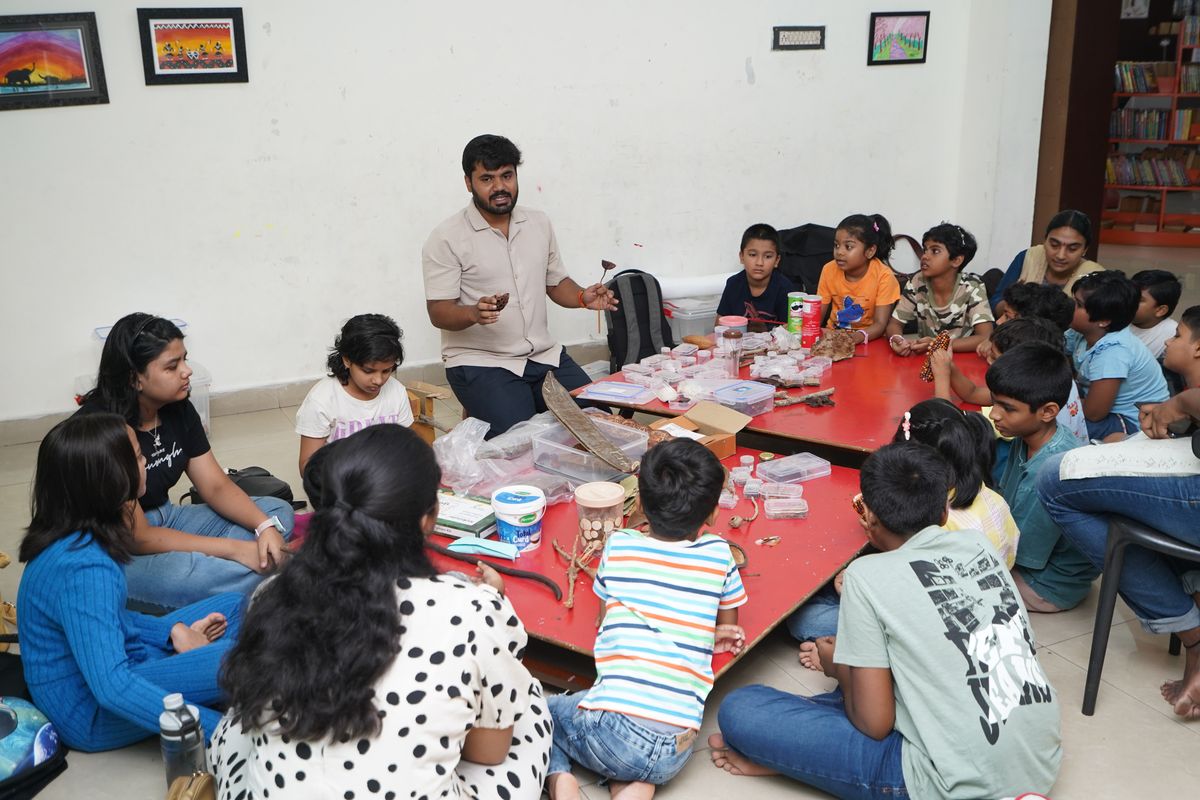
An hour that gets grown-ups looking at the world outside the window again.
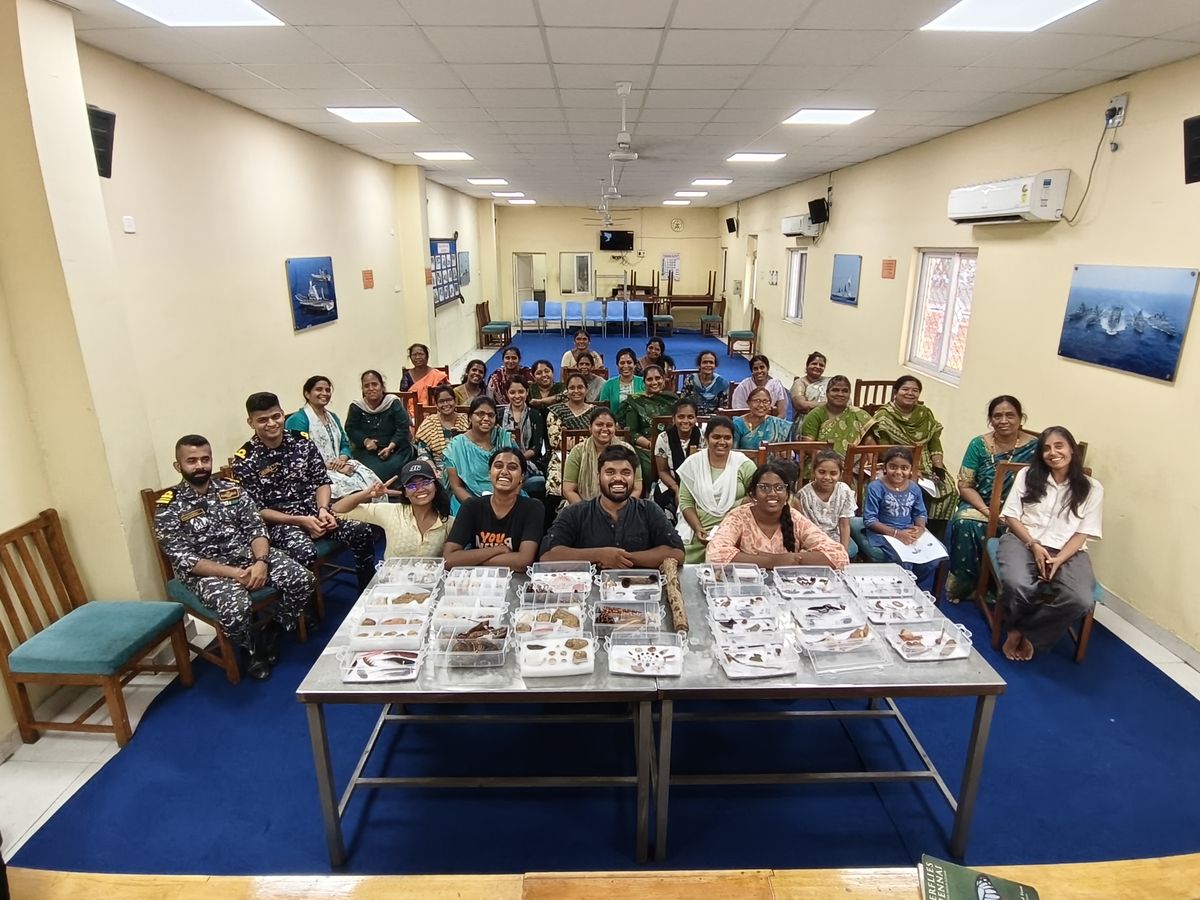
The Hindu's Nivedita Ganguly joined a museum session at a residential society in Visakhapatnam and wrote about children and adults leaning in over spider moults, seed pods and a giant mushroom.
"We came away looking at trees, soil, fungi, and even insects very differently."
Rachita Gupta, parent, in The Hindu
The museum started in Visakhapatnam. Next, it travels to schools across the rural Eastern Ghats.
Many children in rural government schools never get to visit a museum. You can bring one to them. Sponsor a museum session for a school, or a whole term of them, as an individual, a group or through CSR.
The museum is young, and it grows with every person and organisation who joins in.
Help collect, organise and curate the museum's collections, and shape its design.
Get in touch →Lead sessions with the exhibits and help build a curriculum linking climate and nature education.
Get in touch →Schools, learning centres, conservation NGOs and companies who want to take the museum further.
Get in touch →





To your school, community, library or workplace. Tell us where, when and who's coming, and we'll plan the session with you.
Classrooms, parks, libraries and village schools. Tap a photo to see it larger.